The most useful number in habit research is old and durable: Peter Gollwitzer and Paschal Sheeran's 2006 meta-analysis of 94 studies found that implementation intentions — pre-deciding when, where, and how you will act — produced a medium-to-large improvement in goal follow-through across contexts. For writers, the translation is direct: "I will write tomorrow" is a wish; "I will write at 6:30 at the kitchen table after the coffee is poured" is a plan the evidence says roughly doubles your odds of keeping. Habit formation stacks that plan onto repetition until the desk, the hour, and the coffee become the cue themselves.
What actually forms a habit?
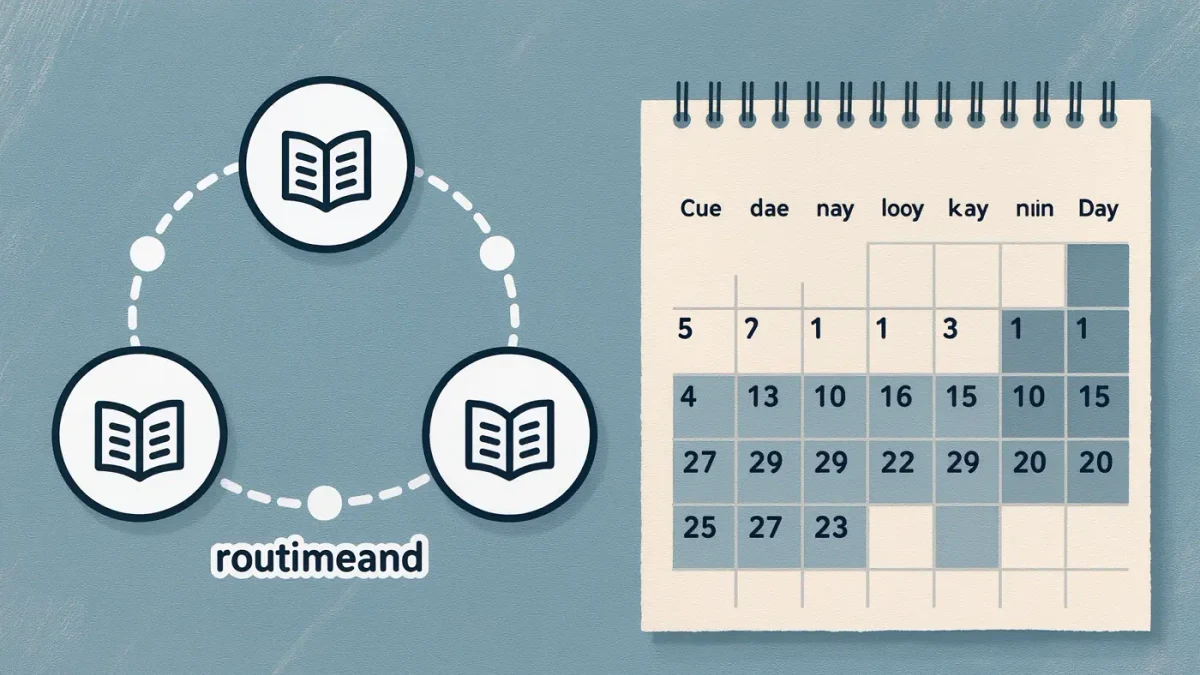
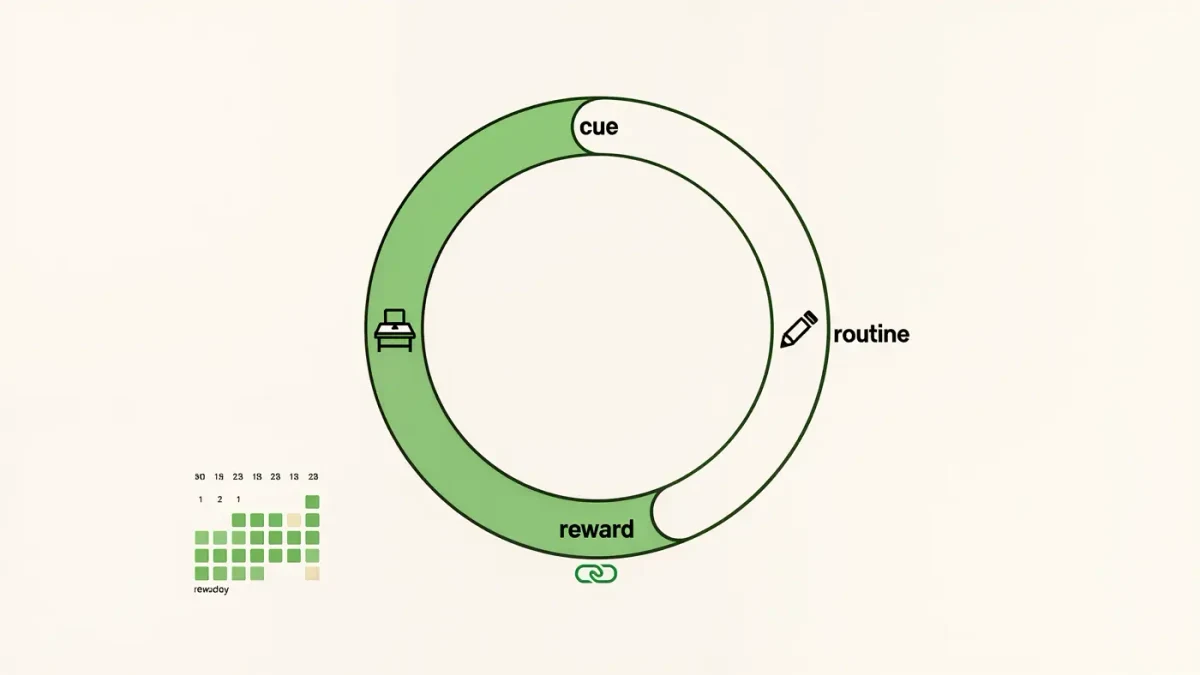
The loop behavioral science describes — cue, routine, reward — popularized in Charles Duhigg's The Power of Habit (2012), with the modern practical vocabulary supplied by James Clear's Atomic Habits (2018): make the cue obvious, the routine easy, and the reward immediate. Writing fits awkwardly on the reward side, because the real payoff — a finished book — arrives years out. The working substitutes are process rewards that close the loop daily: a word count marked, a chain not broken, the small pleasure of stopping mid-sentence where tomorrow will restart easily, the tactic documented in Trollope's account of his own practice.
What is habit stacking, and why does it work for writing?
Attaching the new behavior to an existing anchor: after the coffee, after the school run, after the gym. The anchor already runs on autopilot, and the brain grafts the new routine onto it — the technique Clear systematized and the implementation-intention research supports. For writers with jobs, the stack usually must be built at the day's edges, and the evidence favors morning edges: decision quality and interruption resistance degrade through the day, which is why the documented routines of working novelists skew pre-dawn. The anchor matters more than the hour: a 9 p.m. anchor kept nightly beats a 6 a.m. anchor kept weekly.
How small should the daily minimum be?
Small enough to survive your worst day. The two-minute rule — shrink the habit until starting is trivial — exists because the psychology of streaks is asymmetric: one missed day costs almost nothing, but the story "I broke the chain" costs everything. The productivity advice attributed to Jerry Seinfeld in a 2007 interview — mark a calendar day for every day you write, and don't break the chain — works precisely because the chain is the reward, and chains die of ambitious first links. Writers who set 1,500-word daily minimums on day one are usually back to zero by week three; writers who set one true sentence, and raise it only after the chain has weeks of momentum, build the floor the habit actually stands on.
What about streak-breaking?
Plan for it in advance, because the research on abstinence-violation effects applies to desks as it does to diets: the catastrophic response to one lapse is the collapse mechanism, not the lapse. The documented protocol: never miss twice — a missed Monday is information, a missed Tuesday is a new habit forming in the wrong direction. Writers with long streaks also describe scheduled rest days built into the definition (five days on, two off), which converts the streak from a calendar into a contract and removes the failure mode entirely. The streak is scaffolding for consistency, not the point; when keeping the chain starts driving bad pages, the writer has inverted the tool and the tool needs resetting.
What does the science say about rewards and friction?
Two findings transplant cleanly. Temptation bundling — Katy Milkman's documented technique of pairing a want with a should — lets the writer bind the draft to a pleasure reserved for that hour: the good coffee only at the desk, the favorite playlist only while drafting. And friction engineering beats willpower in every documented comparison: the notebook already open, the file already loaded, the phone already in another room the night before. Writers who rely on deciding each morning are spending willpower the habit was supposed to save; the environment should make starting the path of least resistance, because on bad days it is the only path that functions.
How long until it feels automatic?
Longer than the folk wisdom and shorter than the dread: the widely misquoted 21-day figure comes from plastic-surgery observations, not habit research, while the often-cited study putting the average at 66 days (Phillippa Lally's 2009 work at UCL) also found ranges from weeks to months depending on complexity. Writing, a complex behavior, sits toward the long end — but automaticity arrives on a curve, not a cliff, and writers typically notice the change as a drop in starting friction around the second month. The habit's final form is quiet: the desk stops being a decision.
Frequently asked questions
Do I need to write every day?
No — you need a kept contract with yourself, and the evidence says nothing sacred about seven days. Five on, two off outperforms heroic dailies that collapse, and several documented working writers write in heavy blocks instead. The habit is reliability, not the calendar shape.
What if my schedule rotates?
Anchor to events rather than clock times — after waking, after the first lunch break — and keep the location constant where possible. Implementation intentions survive irregular schedules better than fixed hours do.
Is tracking the same as the habit?
No, and confusing them is the documented failure: the log becomes the product. Track the minimum, audit monthly against manuscript growth, and treat the streak as scaffolding to be removed once the desk pulls on its own.