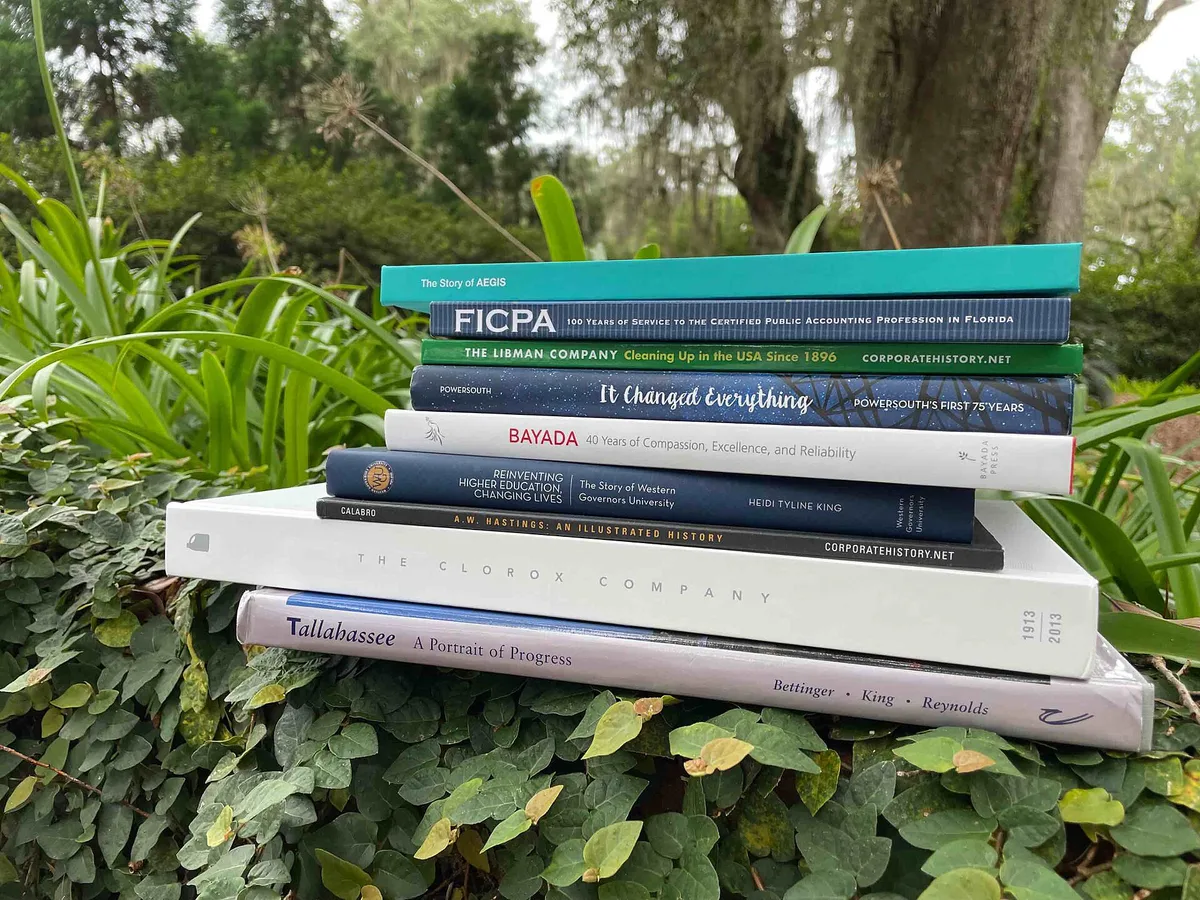
Harmony Publishing, an Albuquerque-based self-publishing company, says it has now published more than 1,000 books for more than 500 authors in over 20 countries since it was founded in 2016. The milestone arrived in a press release dated November 21, 2026, distributed by ABNewswire and carried by several outlets.
The numbers are the company's own, reported by the company — treat them that way. But the release is useful anyway, because it lists in plain language what a full-service self-publishing provider actually does: editing, cover design, interior formatting, ISBN assignment, printing, and ebook distribution. That list is your checklist. Whether you are looking at Harmony or any other author-services company, the same items come up, and the same questions apply to each one. This guide walks through them, so the next press release you read becomes a way to evaluate the whole category rather than one outfit. For more coverage of money and deals in the book world, the site's publishing news section tracks these shifts as they land. For related coverage, see Book Cover Design as Art.
What does a self-publishing company actually sell?
Not publication. You can publish a book yourself on Amazon KDP in an afternoon, free. What companies like Harmony sell is production help. According to the press release, Harmony's work covers book editing, cover design, interior formatting and layout, ISBN and barcode assignment, paperback and hardcover printing, and ebook conversion and distribution. It also offers ghostwriting, memoir writing, children's picture books, and Christian titles such as devotionals and Bible studies.
That distinction matters. A traditional publisher buys your rights and pays you an advance. A hybrid publisher shares costs. An author-services company is a contractor you hire, full stop. Harmony says it describes itself as a self-publishing company and author-services provider, not a traditional or hybrid publisher — and that honest labeling is itself a signal worth checking on any company you consider. The ones that blur the line, implying a traditional deal that isn't there, are the ones that extract money from beginners.
Who keeps the rights and the money?
This is the first question to ask, and the release answers it directly for Harmony: authors keep their rights and 100% of their royalties. Books go out through Amazon KDP, IngramSpark and ebook aggregators, and royalties are paid into the author's own accounts. The agreement is non-exclusive, and authors receive the source files when a project is complete.
Read that list again, because each item is a test you can run on any provider. Where do royalties land — your account or the company's? Is the contract exclusive? Do you get your files back? A company that holds your source files holds your book hostage. "Each of those books belongs to its author," a Harmony spokesperson said in the release. "The company was built around one rule, that the author keeps everything the author brought, and that rule has not changed in ten years." Those are the company's words about its own practice — verify the contract, not the slogan.
How does the production process run?
Harmony's described workflow is a useful template because it is boring in the right ways. The author sends a manuscript as a Word document. The text is edited and set as an interior at a chosen trim size. The cover is designed, and an ISBN and barcode are assigned. The author approves the final files before anything is printed. Copies are printed, and the ebook goes to Amazon and other retailers. The company gives a standard turnaround of four to six weeks, occasionally up to eight weeks, with communication by WhatsApp, email or phone.
The step to notice is author approval before printing. Any provider that skips it, or rushes it, is asking you to sign off on a product you haven't seen. Ask every company on your shortlist two things: who approves the final files, and what happens when a proof arrives wrong. How a maker handles a failed piece tells you more than any portfolio. The same principle holds across craft — we made a similar point about reading a book cover as design work, where the judgment behind the choices matters more than the polish.
What outside checks exist on a company's claims?
Two are named in the release. Harmony is a member of the Independent Book Publishers Association, and on October 20, 2026, it was approved as a Partner Member of the Alliance of Independent Authors, which reviews author-services companies against its Code of Standards before admitting them. The company also publishes an Author Charter and a gallery of published titles with links to the retailers where each book is sold.
Membership is a floor, not a guarantee — it means the company was reviewed at admission, not that every project runs clean. But it gives you a verifiable thread to pull. For any provider: check the trade-body listing yourself, read the charter, and click through the gallery to confirm the books exist at the retailers named. The company operates from Albuquerque for the US market and from Lagos for Nigerian authors, with pricing in naira and local printing — a reminder that geography and payment rails are legitimate evaluation criteria too.
Who is this path actually for?
According to the company, its authors include first-time writers with a completed manuscript, memoir and family-history writers, business owners and consultants, ministry authors, children's book authors, speakers and coaches, and writers reprinting an earlier title in a new edition. That is a fair portrait of who buys production help: people with a finished manuscript and a reason to see it in print who would rather pay for editing, design and distribution than learn them.
It is not the only path. Traditional publishing still runs through agents, and if you are weighing the two, it helps to understand what each side's costs look like — including what an agent's commission actually covers in a traditional deal. The honest comparison is rights, money and control, and no press release from either direction settles it for you. This connects to our earlier piece, What That 15 Percent Agent Commission Actually Covers.
What to take from the milestone
The evidence here establishes what Harmony says about itself, its stated terms, and its trade-body memberships. What it does not establish is how any individual project went, or whether the terms hold in every contract. Both remain unknown until you check the charter, the gallery and the agreement in front of you. The durable lesson outlasts this news cycle: a good author-services company is one whose contract lets you walk away with everything you brought — the manuscript, the rights, the royalties and the files. Ask for that in writing, from anyone.