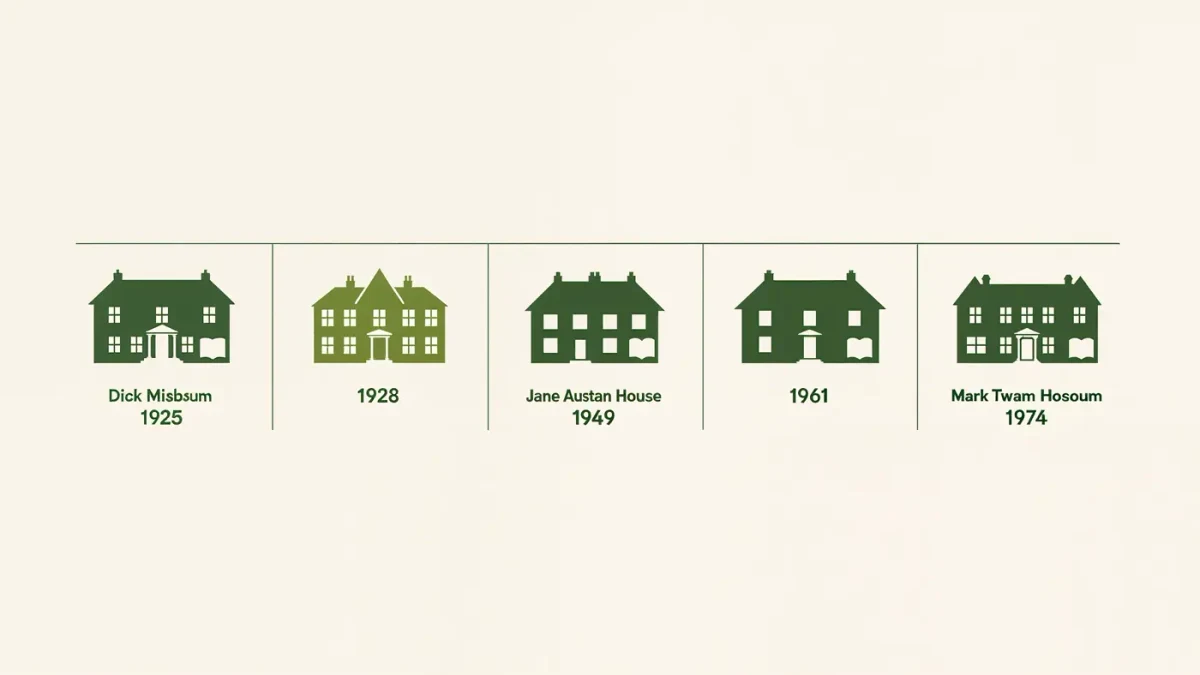
The genre has a founding generation: the Charles Dickens Museum at 48 Doughty Street opened in 1925, the Brontë Parsonage Museum in Haworth took in its first visitors in 1928 under the Brontë Society, and Hartford's Mark Twain House — saved from demolition in 1929 — reopened as a museum in 1974 after restoration. A house where writing happened, kept as a shrine and an archive, is now a standard cultural institution on both sides of the Atlantic, and for working writers it is the most visitable form the literary past takes.
What does a writer's house museum actually preserve?
The writing's working conditions, mostly. The Brontë Parsonage displays the rooms where the sisters produced their novels; the Twain House in Hartford shows the billiard room where Mark Twain wrote; Ernest Hemingway's Key West house — a museum since 1961 — keeps the studio and the typewriter in working pose. Curators describe the exhibit logic as composition environment: desk, view, light, the objects the writer handled daily. What the houses cannot show is the thing itself — the years of failure a room contains — and the best of them, the Brontë Parsonage included, now use manuscripts and drafts on rotation to make process visible rather than just furniture.
How did the genre start?
Pilgrimage, formalized. Readers visited Stratford and Abbotsford long before any institution existed; the Dickens and Brontë museum openings of the 1920s professionalized the impulse with societies, ticketing, and conservation standards. The American pattern ran through preservation crises: the Twain House was saved at auction in 1929 by community fundraising, a story the museum tells as its origin myth, and many American literary sites followed the same save-the-house arc mid-century. In Britain, the National Trust and local societies hold most of the portfolio; in the United States, sites range from the National Park Service's Longfellow House — Washington's Headquarters National Historic Site in Cambridge, a literary landmark run by the federal government — to house museums operated by single-purpose foundations.
Why do towns fight for these houses?
Because literary tourism is placemaking economics. Haworth's economy runs on the parsonage; Chawton consolidates around Jane Austen's House, which opened as a museum in 1949; Key West's Old Town absorbs the Hemingway house into its brand. Cultural-tourism research consistently finds heritage visitors stay longer and spend more than day-trippers, and a named writer gives a small town a story no marketing budget could invent. The fight goes the other way too: when a writer's house faces demolition — as the Twain House did in 1929 — the campaigns to save it draw on exactly the sentiment the museums later institutionalize, and the pattern has repeated on several continents since.
What happens to the writing itself?
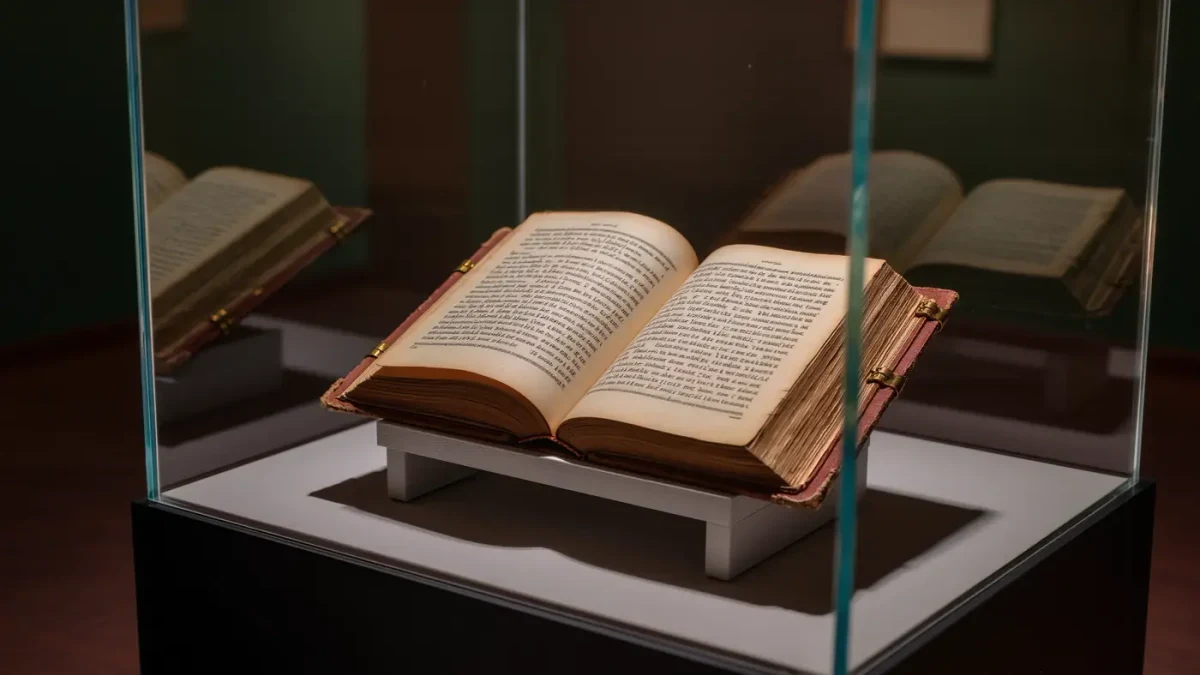
It goes to the reading rooms, mostly, not the walls. Paper is light-sensitive: museums rotate manuscript displays in low light for limited runs, while research collections live in adjacent archives or partner institutions. The houses therefore trade in atmosphere and artifacts — desks, portraits, first editions, the writer's library — and the manuscripts' deeper home remains the great collecting libraries. For visitors who write, the room is the exhibit: the scale of the desk, the smallness of the room where Wuthering Heights was drafted, the distance between bed and table in a house that produced three novelists before the age of planes.
Can working writers use these houses, not just visit them?
Several houses run residencies, which is the genre's best-kept secret. The James Merrill House in Stonington, Connecticut — the poet's home, run as a writer-in-residence program — is the standard example; the Mark Twain House has hosted resident writers; and sites associated with the Poetry Foundation network maintain small live-in fellowships. The terms vary from free rooms for weeks to stipends, and competition resembles a small grant cycle. For writers between projects, the pitch is literal: the same square footage, morning light, and quiet that produced the canonized work, now with Wi-Fi.
Why visit at all?
Because scale is documentation. Reading about the Brontës' cramped parsonage is one fact; standing in the dining room where the sisters wrote in circles after household duties is a recalibration of what conditions the work actually requires. The genre's honest limitation — no house explains the sentences — is also its point. What the visit teaches is not how the books were written but where, and the distance between those two questions is the beginning of a working writer's relationship to the past.
Frequently asked questions
Which writers' house museums are the most visited?
Shakespeare's birthplace in Stratford-upon-Avon anchors the global list, and in the United States the Hemingway Home in Key West and the Mark Twain House draw the broadest visitation. Institutions publish annual figures unevenly, so rankings shift; the stable fact is that the founding-generation houses — Dickens, Brontë, Austen — remain the genre's core.
Do these museums show original manuscripts?
On rotation, briefly, and usually as facsimiles or single-page displays because paper cannot sit under gallery light. The working manuscripts mostly live in research libraries like the British Library or university special collections, with house museums borrowing for anniversaries.
Can you write at a writer's house museum?
Sometimes — beyond residencies, several sites open rooms or grounds for writing sessions and run workshops in the off-season. Policies are per-site; a house with a residency program, like the James Merrill House, is the place to start.