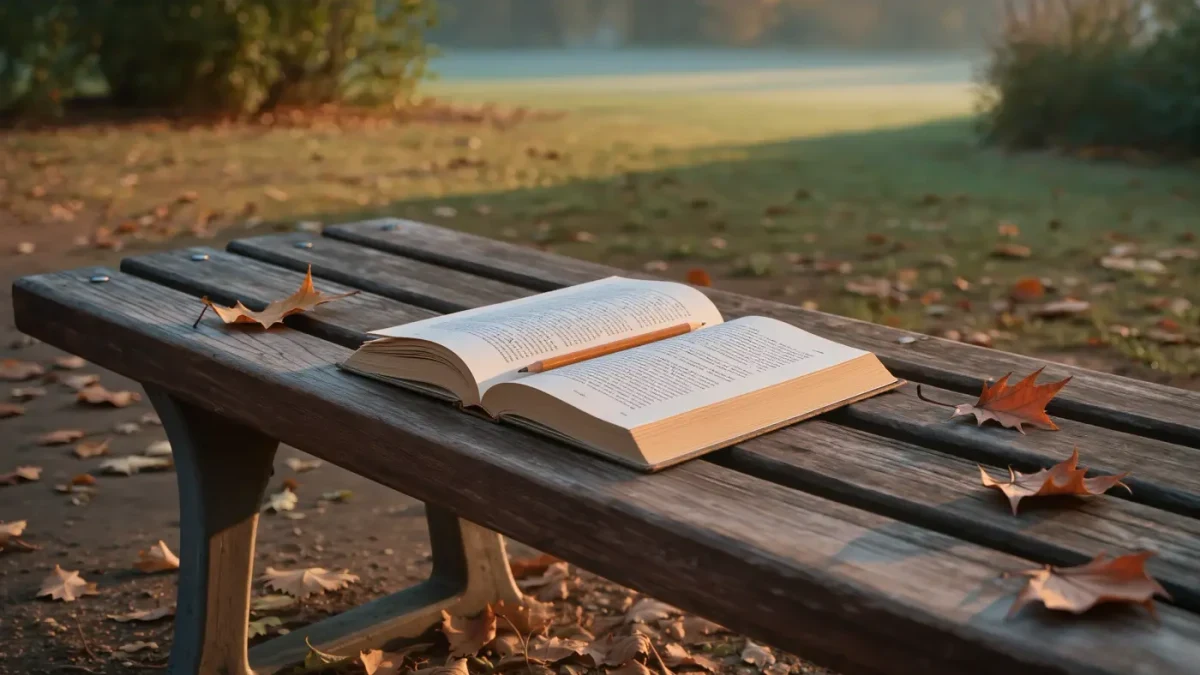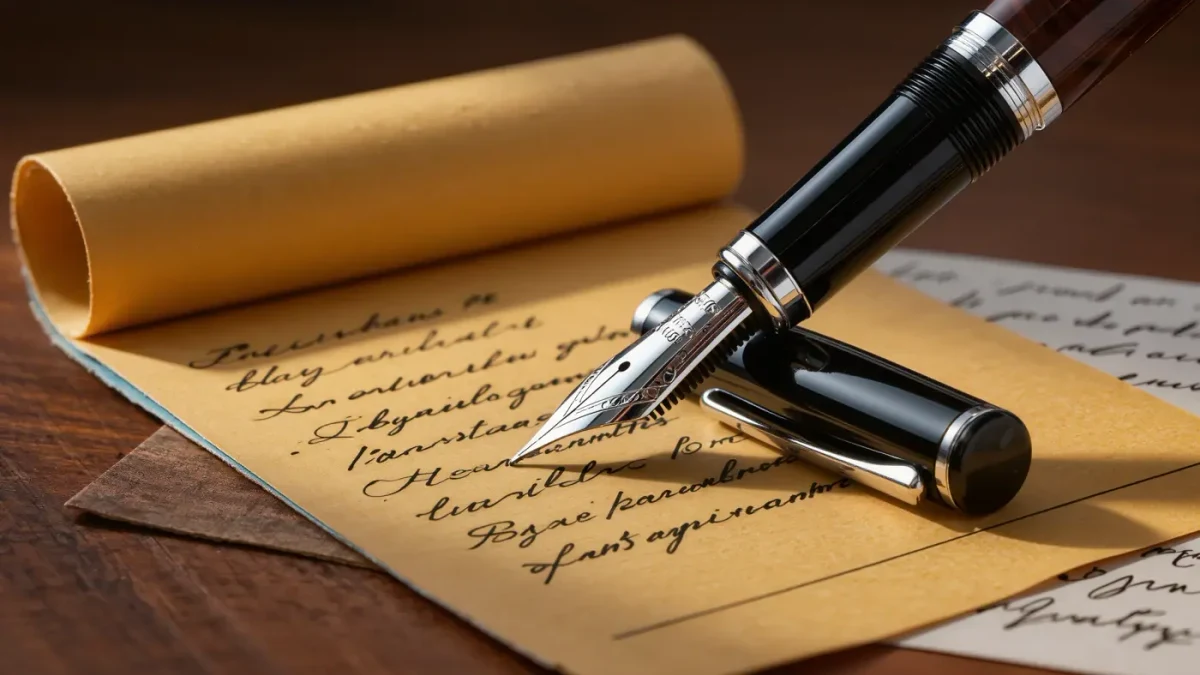
The most documented longhand career belongs to Robert Caro, whose memoir Working (2019) describes writing in pencil and then typing the manuscript three or four times — each transcription pass functioning as a built-in revision. On the research side, Mueller and Oppenheimer's 2014 study "The Pen Is Mightier Than the Keyboard" found longhand note-takers summarized and retained conceptual material better than laptop users, a finding later complicated by replication attempts but never reversed into an argument for typing's superiority. The drafting question is not which tool is better — it is which failure of the drafting mind each tool corrects.
What does writing by hand actually do differently?
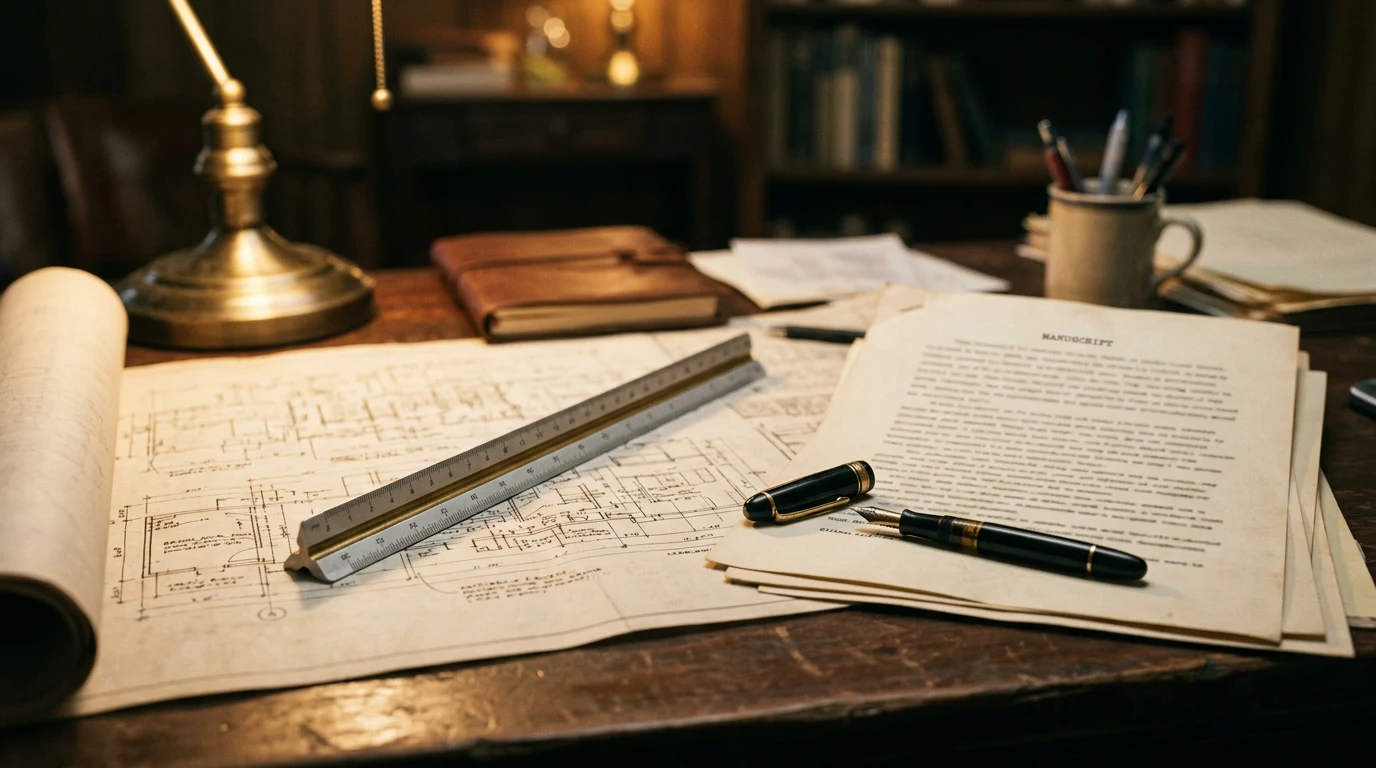
It slows the hand below the thought. Typed drafting runs at transcription speed — fast enough to record every sentence the mind offers, including the weak ones. Longhand's friction enforces selection: the sentence must be worth the labor of forming it, and writers who draft by hand, Joan Didion and Joyce Carol Oates among the documented practitioners, describe the slowness as thinking rather than typing. There is also the permanence effect: paper has no delete key, so the forward-only draft keeps moving — the crossed-out sentence stays visible beneath its replacement, and the manuscript accumulates its own history rather than erasing it.
What does the keyboard do better?
Volume, search, and revision fluidity. A keyboard drafter produces roughly double the words per hour, can find any phrase in seconds, and can restructure by dragging rather than retyping — the properties that made word processing transform revision culture in the 1980s. For writers whose books are long and whose memories are human, search alone is decisive in late drafts. And for writers with repetitive strain injuries, dysgraphia, or hand conditions, the keyboard is not a preference but the only door; accessibility outweighs every romantic argument about pencils, a point craft discussion too often omits.
Is there evidence one produces better drafts?
No controlled evidence worth trusting — the note-taking studies measure retention, not composition, and their replication record is mixed. The honest evidentiary layer is the biographical record, which is enormous on both sides: longhand first-drafters from Caro to Oates, keyboard novelists from the generation that grew up on word processors, and no quality gradient visible in the published books. What the record does show is a selection effect: longhand tends to suit writers whose problem is overproduction and self-editing paralysis; the keyboard suits writers whose problem is getting words out at all. Diagnose your failure, then pick the tool that fails the other way.
What is the hybrid, and why does it work?
Draft on paper, transcribe to screen, and treat the transcription as the first revision — Caro's own architecture. The pass forces every sentence through the hands twice, and the second contact happens with the writer in typist's detachment, reading what is there rather than what was intended. Writers using the hybrid describe transcribing a chapter and discovering, sentence by sentence, which lines they were tempted to skip typing — the skip impulse being the purest available signal of dead prose. The costs are time and a second desk; the benefit is that revision begins before drafting ends, without a single dedicated revision session.
How do you run a fair test on yourself?
- Draft two comparable scenes — same characters, same length target — one longhand, one typed, on consecutive days.
- Transcribe both to the same file format and shelve them for a week.
- Read cold and mark where each dragged; count what you cut from each.
- Note your session experience honestly: which session ended with momentum for tomorrow?
- Decide per phase, not per identity — many writers draft longhand and revise on keys permanently, and that combination is the documented mainstream of the hybrid.
What about pens, paper, and the apparatus?
The apparatus matters less than its consistency, but the documented practitioners are particular for a reason: the tool that stays the same removes a daily decision. Caro's pencils and legal pads, Oates's notebooks — the specific brand is superstition, the sameness is engineering. The one practical upgrade worth the money is paper that survives being carried; drafts written in cheap notebooks die at the bottom of bags. Whatever you choose, choose it once and stop shopping — the drafting hand needs a tool it has stopped noticing, which is the same rule the keyboard drafters follow in reverse.
Frequently asked questions
Do most novelists write by hand?
A documented minority, larger among literary writers than genre writers, and shrinking generationally — but the hybrid (longhand draft, typed everything else) has stable adherents across age groups. No survey settles it cleanly; practice is private and mixed.
Is handwriting really better for memory?
The 2014 Mueller–Oppenheimer findings favored longhand for conceptual retention in note-taking, with later replications softening the effect. For drafting, the honest claim is about pace and selection, not memory.
What if I type much faster than I think?
Then typing is producing first-draft noise, and longhand's friction is precisely the medicine — draft the hard scenes on paper and keep the keyboard for the easy connective tissue. The mix is legitimate and common.
Can the transcription pass be delegated to OCR?
Partially — scanning saves the typing but deletes the revision, which is the point of the pass. The compromise documented among hybrid writers: OCR for clean pages, manual retyping for chapters that feel wrong, so the hands go where the problems are.