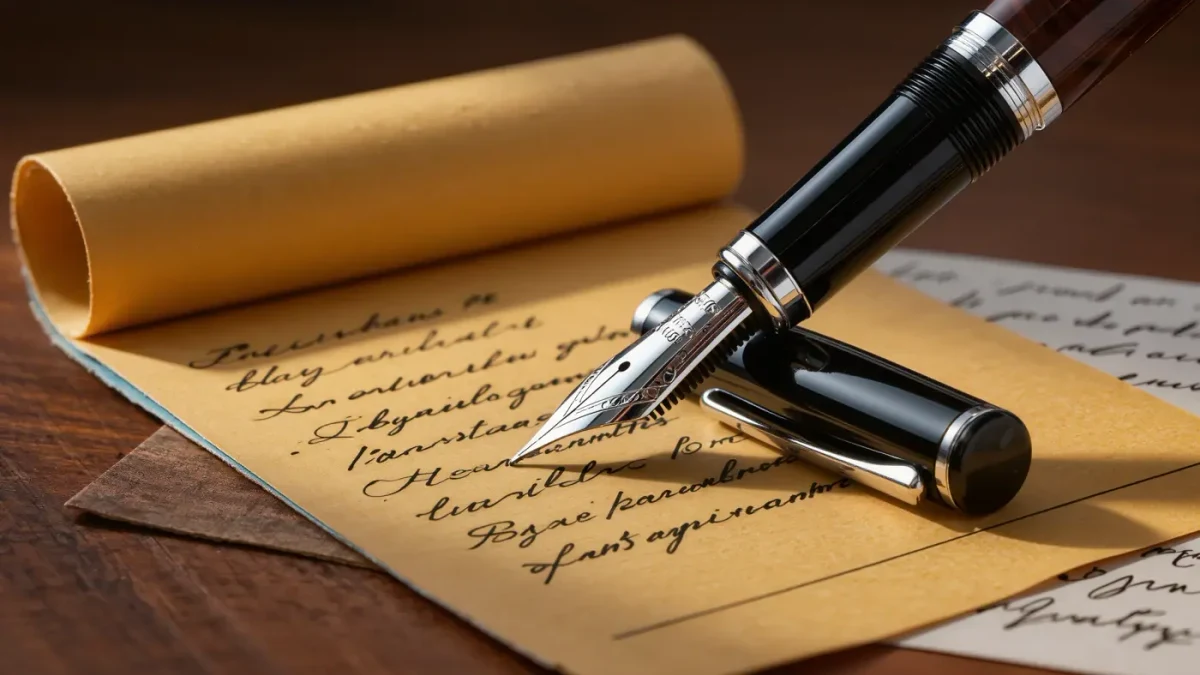
The founding documented exercise is Benjamin Franklin's: in his Autobiography he describes taking notes on essays from The Spectator, setting them aside for days, then reconstructing the essays from the notes and comparing his version against the original, line by line, to locate exactly where his prose failed. That is reading like a writer in one sentence — reading to reverse-engineer the machine. The modern version of the practice, popularized by Francine Prose's Reading Like a Writer (2006), is slower reading of better books with a pencil, and it works the way Franklin's version worked: by making the gap visible.
What separates reading like a writer from reading like a reader?
Attention to mechanism. A reader follows the scene; a writer reading asks how the scene moved — where the paragraph turned, what the sentence lengths did at the emotional peak, why the dialogue withholds the name. The shift is partly speed: close reading cannot happen at pleasure pace, which is why the practice requires separating consumption reading from training reading entirely. One novel per month read with a pencil teaches more than fifty read for plot, because the pencil forces the questions: what did this sentence do, and could I do it?
What did the documented practitioners actually do?
Three methods recur across published accounts. Franklin's reconstruction — notes today, rewrite next week, compare against the master — trains argument and cadence at once. Hunter S. Thompson retyped passages of The Great Gatsby and Faulkner to feel the rhythm in his hands, a practice he described in interviews; the typing adds nothing intellectual and everything physical, the way musicians learn solos by playing them. And the commonplace-book tradition — copying admired passages into a notebook with their sources — runs from Renaissance scholars through most documented writers before the twentieth century; the physical archive of sentences worth keeping becomes, over years, a private anthology of the writer one is trying to become.
How do you read one page closely?
- Count the sentences and their lengths. Write the sequence — 3, 12, 4, 27 — and look for the pattern against the page's emotional shape.
- Find the paragraph's turn: the sentence where the meaning changes direction. Mark it. Ask what prepared the turn.
- Circle the verbs. A page's energy lives in them; list five and ask why those five.
- Identify the sentence you would have written differently, and rewrite it. Then compare. Franklin's gap, made small and repeatable.
- Question one word choice — the exact adjective, the withheld name — and ask what the near-synonym would have cost.
What should writers read for training?
Above their current level, and slower than comfort. The documented advice from Prose and from workshop tradition converges: the training shelf is books that survive rereading — the ones that teach sentence by sentence rather than by surprise. Genre matters less than density: a western with perfect scene mechanics trains better than a literary novel that coasts. Rereading is the multiplier, because the second pass removes plot suspense — the reader's main distraction — and leaves the machinery exposed. A writer who has read Gatsby four times owns its transitions in a way no first-time reader can.
How does the commonplace book work in practice?
Simple rules keep it alive: copy by hand, always note the source, never copy what you merely agree with — copy sentences that do something you cannot yet do. Review happens quarterly, rereading for patterns in what you chose; the selections describe your intended voice more honestly than any statement of intent. The notebook is also the cheapest cure for influence anxiety documented in craft columns: writers who copy by hand discover their models are assembled from other models, and the debt stops feeling like theft and starts feeling like apprenticeship.
How much training reading is enough?
The working ratio documented across writers' accounts is modest: one close-read book per month alongside ordinary reading. The exercise decays into consumption when rushed, so the unit is the page, not the novel — ten pages properly interrogated outrun a skimmed shelf. Writers who defend the practice point to its compounding: a year of Franklin comparisons on essays and close pages on fiction changes what the writer notices while drafting, which is the entire mechanism by which reading improves writing.
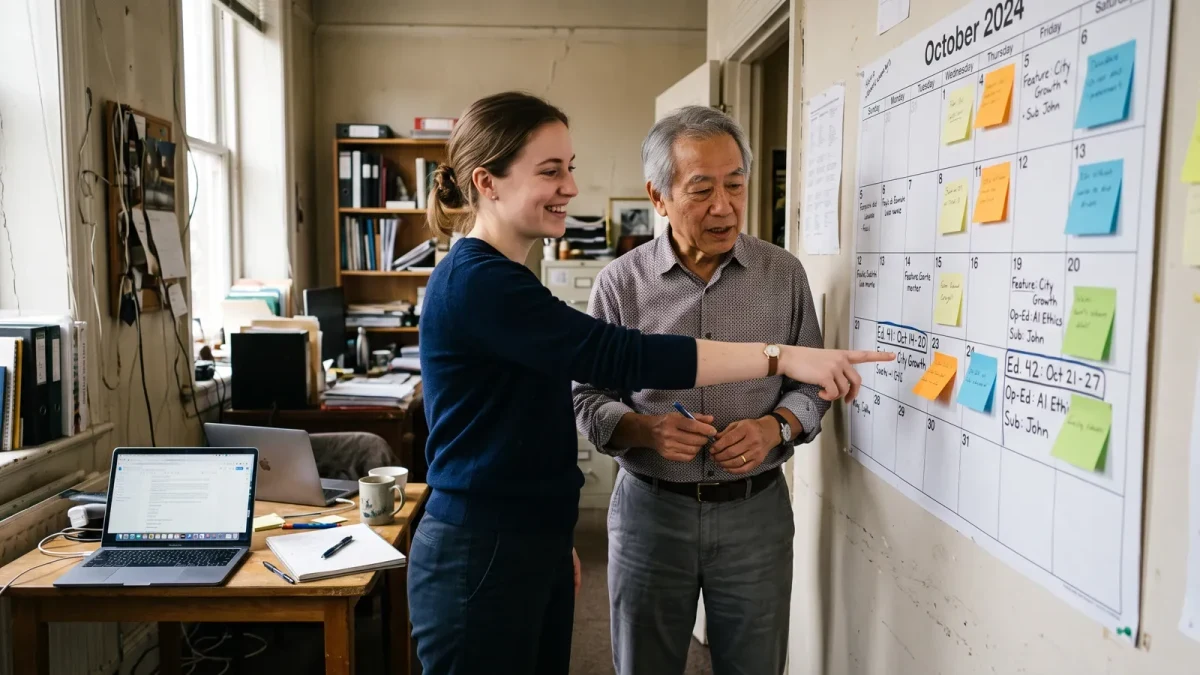
A sample week, assembled from the documented methods: one page per day through the five-step close reading, one passage copied by hand into the commonplace book, and one Franklin reconstruction per month against a published essay in your genre. Twenty minutes a day covers it. The writers who defend the practice most forcefully are the ones who kept it small — training that fits inside a life survives, and the pages interrogated across a year quietly renumber in the hundreds.
Frequently asked questions
Does reading like a writer ruin reading for pleasure?
It splits it, which is different. Pleasure reading stays available — writers report the analytical mode switches on for the training shelf and off elsewhere. And the training itself becomes its own pleasure: the page that explains itself is a different delight from the page that only delivers.
Is copying passages by hand legal as training?
Yes — private copying for study is a personal exercise, and the commonplace book is a private archive. What one cannot do is publish the copies or pass the phrases as original; the practice is apprenticeship, not quotation.
Should I read craft books instead?
Alongside, not instead. Craft books name the moves; close reading shows them working at full speed. The documented sequence that sticks is craft book first for vocabulary, then close reading to see the vocabulary in the wild.