Writing a check means filling out six fields in ink: the date, the payee, the amount in numbers, the amount in words, a memo if you want one, and your signature. Get those six right and the check is valid. Skip the signature or leave the amount blank, and anyone who holds the paper can fill in the gap themselves.
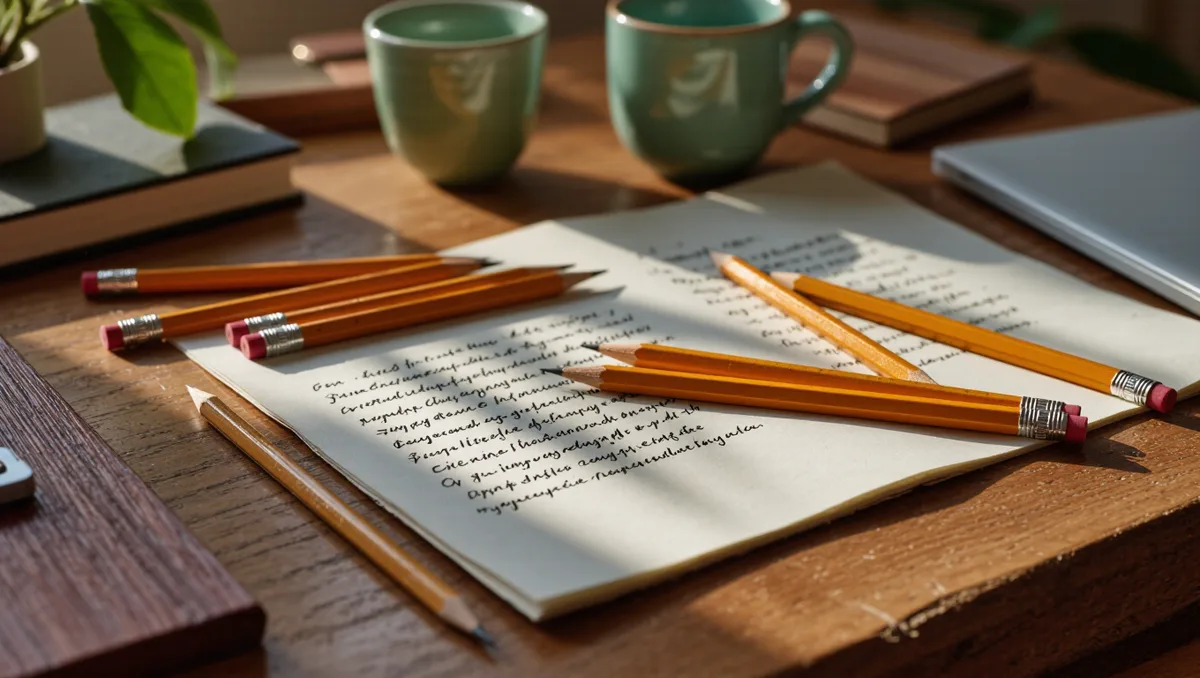
Paper checks still show up at rent offices, small contractors, wedding vendors, school offices, and government counters. Some landlords and tradespeople prefer them because there is no app fee and the canceled check is a receipt. So the skill has not died. It has just gone unwritten-down, the way cursive did. This connects to our earlier piece, Why Pencil Still Beats Screen for Early Drafts.
There is a craft angle here too. As Wikipedia's overview of writing notes, writing is the act of creating a persistent, usually visual representation of language on a surface, and handwritten records have long served to store information for later reading. A check is exactly that: a small, durable legal document you produce by hand, once, under a bit of pressure. It rewards the same deliberate practice any manual skill does.
What do you need before you start?
You need the checkbook your bank issued, a pen with permanent ink, and three facts: who you are paying, how much, and the date you want on it. Use blue or black ink. Pencil can be erased, and erasure is the one thing a check must never show. If you make a mistake, do not scrub it out. Write "VOID" across the face of the check, tear off the stub note, and start on the next check in the book. The stubs are your record, so keep them.
Never sign a blank check and never leave a field empty. An open amount is an invitation. If you must carry a check to someone, fill in everything except the signature and sign it in front of them if you can.
How do you fill in each line?
Work top to bottom. The order matters less than the habit of finishing one field before touching the next.
- Date. Write the full date in the top right corner. Month, day, and year. A check is a dated promise, so an ambiguous date causes arguments later. Postdating a check, meaning writing a future date, does not reliably stop a bank from cashing it early, so do not treat it as a holding mechanism.
- Payee line. Next to "Pay to the order of," write the person or business name, legibly and completely. Spell it the way the recipient's bank account is titled. A nickname like "Bob" on a check to Robert Alvarez's business can bounce. If you are paying a company, use the company's full name.
- Amount in numbers. In the box on the right, write the figure close to the dollar sign and as far left in the box as it naturally sits. Write 1,250.00, not 1250, and draw the cents clearly. The tight fit matters: a gap before the number leaves room for someone to add a digit. Some people run a line through the unused space in the box.
- Amount in words. On the long line below the payee, write the amount out in words, then the cents as a fraction over one hundred, like this: "One thousand two hundred fifty and 00/100." The words are the legal amount. If the words and the numbers disagree, most institutions treat the written words as controlling, which is exactly why this line exists. End with a long horizontal line to the edge, so nothing can be added after your words.
- Memo line. Optional, and more useful than it looks. "October rent," "Invoice 4471," "drum lessons." The memo does not bind anyone legally, but it tells both of you what the payment was for when you reconcile it months later.
- Signature. Bottom right, in the same ink, the way you sign your bank documents. This is the instruction that makes the check a check. Sign it last, after every other line is complete.
What should you do after handing it over?
Record it. Every checkbook has a stub or a register, and filling it in before the check leaves your hand is the whole trick. Write the check number, the date, the payee, and the amount. This is your ledger, and it is how you catch a check that never got cashed or one that cleared for the wrong figure. People who skip the register are the ones who bounce checks by forgetting what is outstanding.
Keep the counterfoil, or the carbon strip if your book has one, until the payment has cleared and the purpose is settled. If a check is lost or stolen, call your bank as soon as you know. Banks can place a stop on a specific check, though policies and fees vary by institution, so ask your own bank what it requires rather than assuming.
Why does the amount appear twice?
The double entry is the security system. Fraudulent alteration is as old as paper money, and the check's design assumes someone may try to change it. The numeric box is convenient for machines and fast reading. The written line is hard to alter without the change showing, because words do not stack into other words the way digits do. A one can become a seven with a stroke; "one" cannot quietly become "seven." That redundancy is deliberate engineering, the same instinct that makes a photographer bracket an exposure or a typesetter keep a proof copy. You build in a second reading of the same fact.
It is also why banks ask you to start each field at the left edge. A check is a small form with a threat model, and every crowding rule on it exists to close a gap.
What this means for how you practice any hand-written form
A check is a good teacher because it is unforgiving in a small, contained way. You write it once, in ink, for a real audience, and errors cost paper and pride rather than anything larger. That is the structure of good deliberate practice: a defined task, immediate feedback, and a constraint that keeps you honest. The writing-coach site The Write Practice frames deliberate practice the same way, arguing that the best writing practice is specific, timed, and gets feedback, rather than being whatever happens to come out of the pen. Filling in a check stub is a tiny version of that discipline.
The same patience applies elsewhere on paper. We have argued before that pencil still beats screen for early drafts, for much the same reason: a slower hand catches things a fast keyboard slides past. And if your paper rituals extend to money you are owed, our piece on how a book advance actually gets paid out covers the other side of the ledger, where checks and wire transfers still do real work.
The last line of defense is your own attention
What the evidence establishes is simple: a check is a hand-written legal instrument with six fields, a built-in redundancy between numbers and words, and a record-keeping habit attached. What no general guide can settle for you is your own bank's rules on holds, stop payments, and disputed amounts. Those vary. Ask before you need to know.
Fill it slow, sign it last, log it immediately. The ritual is fading, but the care it demands is not. That care transfers, and it is the part worth keeping.