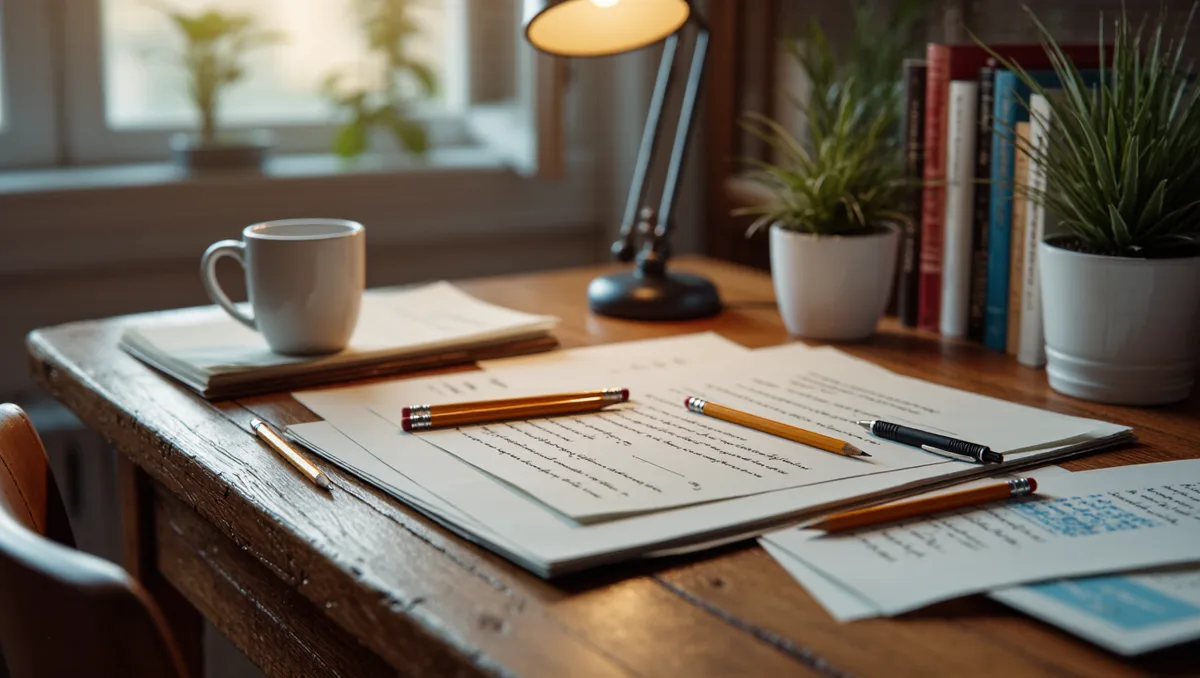
For early drafts, pencil usually beats the screen because it forces a slower pace, strips away the delete key, and keeps the editing brain out of the room. The claim is about habit and craft, not magic: no pencil will finish a novel for you. But the physical differences between graphite and keyboard change how a first pass feels, and those changes matter most when the draft is still wet clay.
The pencil-vs-typing question comes down to what each tool does to your attention. A keyboard is fast, and speed invites polish. A pencil moves at the speed of the hand, and that pace leaves room for the sentence to change its mind. Neither tool is right for every writer or every stage — but for the messy, generative work of a first draft, the slower tool has real advantages worth understanding before you dismiss it as nostalgia.
Why does pace matter so much? The word itself is doing quiet work in every craft conversation. Cambridge Dictionary defines why as the question of cause or reason — and in drafting, the cause of a good sentence is usually a patient one. Ask why a draft stalls and the answer is often that the writer began editing before the draft existed. The pencil's whole contribution is that it delays that moment.
What does a pencil actually change about drafting?
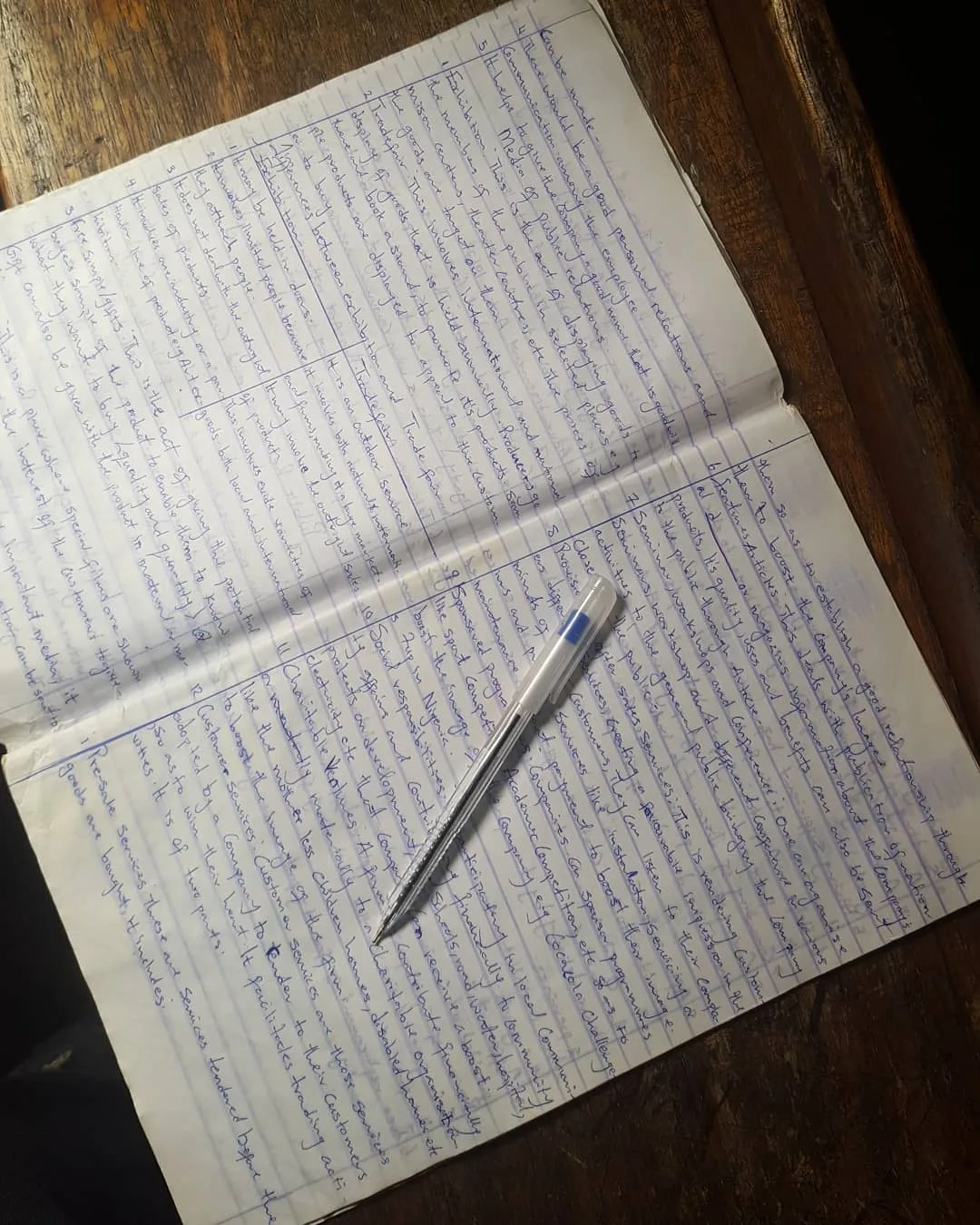
Three things, and they compound. First, speed. Most people type faster than they write by hand, which means the keyboard rewards filling space quickly. Handwriting puts a physical brake on output, so each sentence gets a beat of thought before it lands. Second, permanence. Typed words look finished the moment they appear on screen. Pencil marks stay provisional — you can see the crossings-out, the arrows, the word tried in the margin and abandoned. The draft keeps its roughness visible, which makes it easier to keep moving.
Third, the delete key — or rather, its absence. On screen, deleting is frictionless, so writers delete early and often. That feels productive, but it can kill sentences that were almost right. With a pencil, a bad line gets a single strike-through and stays legible. You can read what you almost wrote, which is often the seed of what you should have written. A contact sheet of failed takes, in other words — the same logic film photographers use when they keep every frame, not just the keepers.
How does slowness help memory and flow?
Writers who draft by hand commonly report two effects: they remember their own scenes better, and they lose their thread less often. Both make sense without any lab study. Writing a word by hand takes longer and involves more of the body than typing it, so the sentence gets more processing time. More processing time means the scene stays in your head while you write the next one. On screen, the text lives in the document; on paper, it has also lived in your hand. For related coverage, see First Person vs Close Third: A Scene Drafted Both Ways.
Flow works similarly. The screen is a portal — every document has an email client behind it, a browser tab, a notification. Paper has no notifications. The pencil session is bounded by the page: when the page is full, you stop. That natural stopping point is a feature, not a bug. It gives you a clean place to resume tomorrow, which is exactly the problem our guide on how to start writing a book without losing steam treats at length. Momentum survives on clean edges.
The pencil does not make you a better writer. It makes you a more patient one, and patience is where better sentences come from.
When does typing win instead?
Be honest about the limits. Handwriting is slow, and slow is a cost. If you write long fiction and your first drafts run eighty thousand words, transcribing all of it by hand and then again at the keyboard is a real burden of hours. Writers with repetitive strain, limited hand mobility, or simply a strong established keyboard practice may find the pencil breaks their rhythm rather than helping it. The honest framing is not that pencil is superior. It is that pencil and screen suit different jobs.
A practical split many working writers land on: draft scenes or chapters by hand when the material is uncertain, then type it up as the first light revision pass. Typing up handwritten pages forces you to reread every sentence once before any heavy editing begins — a free structural read you would otherwise have to schedule. Later passes, where you are cutting, rearranging, and checking continuity, belong on the screen. Revision is search-and-replace work as much as sentence work, and the computer is the better search engine. Our guide to revising a novel in passes assumes exactly this: different passes want different tools.
What this means for your routine
Try the pencil as an experiment, not a conversion. The setup costs almost nothing: a notebook that lies flat, a pencil you like the weight of, and a rule about what the notebook is for. Keep the rule small — one scene per session, no rereading yesterday's pages until the current scene is done. The goal is a stack of pages that exist, not beautiful pages. If a week of handwritten sessions produces nothing but resistance, that is data too; some minds genuinely think at keyboard speed, and there is no virtue in pretending otherwise.
Two small techniques make the transcription pass more useful. Write on every other line, so revision space is built in. And when a sentence goes wrong, strike it through rather than erasing — the failed version is evidence about what you were reaching for. Treat the notebook the way a darkroom printer treats a work print: it is not the object, it is the record of the decisions. Once the pages are typed, the heavier craft questions — structure, point of view, whether the middle sags — open up. If the middle does sag, our piece on fixing a saggy middle picks up from there.
Where pencil fits in the larger drafting picture
The deeper point is about matching tools to stages. Early drafting is generative: you are finding out what the story is, and anything that slows judgement helps. Later stages are evaluative: you know what the story is, and anything that speeds comparison helps. Pencil serves the first job, the screen the second. Writers who conflate the stages — editing while generating, on the fastest tool available — often end up with polished openings and no endings.
None of this settles the pencil-vs-typing question permanently, because it is not a question with a permanent answer. It is a question about your own attention, and only your own pages can answer it. What the habit argument does establish is modest and useful: the pencil buys slowness, slowness buys patience, and patience is the raw material of revision. Try it for one chapter. Keep the contact sheet either way.