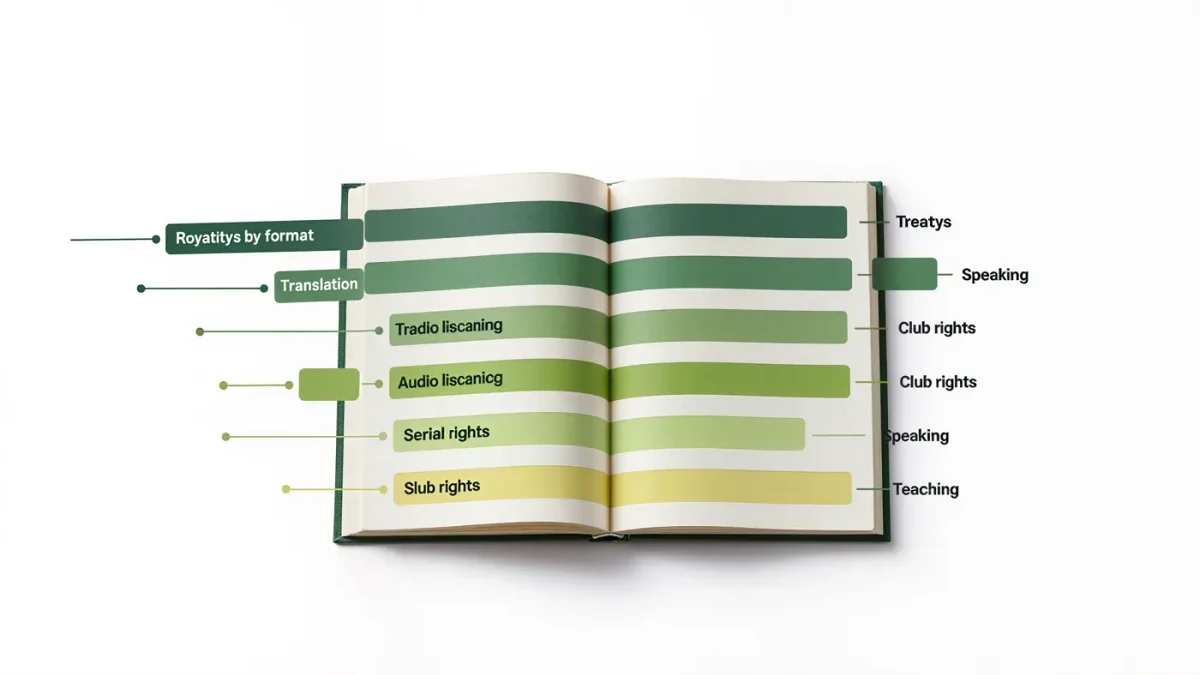
Under standard Big Five boilerplate, ebooks pay authors 25 percent of the list price and hardcovers pay 10 to 15 percent — rates the Authors Guild's contract materials have documented for years — while audiobook licensing has become the industry's fastest-growing income line, with the Association of American Publishers' StatShot reports logging more than a decade of double-digit audio growth through 2025. The advance is just the opening payment against those streams. What a book earns afterward depends on rights splits the author negotiated, usually once, before publication.
What are royalties, mechanically?
A royalty is the author's contractual share of each sale, defined by format. The common tiers: 10–15 percent of list on hardcover (often escalating at volume break points), 7.5–10 percent on trade paperback, and 25 percent of list on ebooks at major houses. Royalties accrue against the advance — the earnout — and money beyond the advance arrives as royalty statements, typically on a semiannual lag. Two structural notes matter: deep discounting clauses can cut the royalty rate on heavily discounted copies, and ebook royalty rates have been the most contested term in author-publisher negotiations since the format arrived, which is why the Authors Guild made them a standing campaign.
What are subsidiary rights, and who sells them?
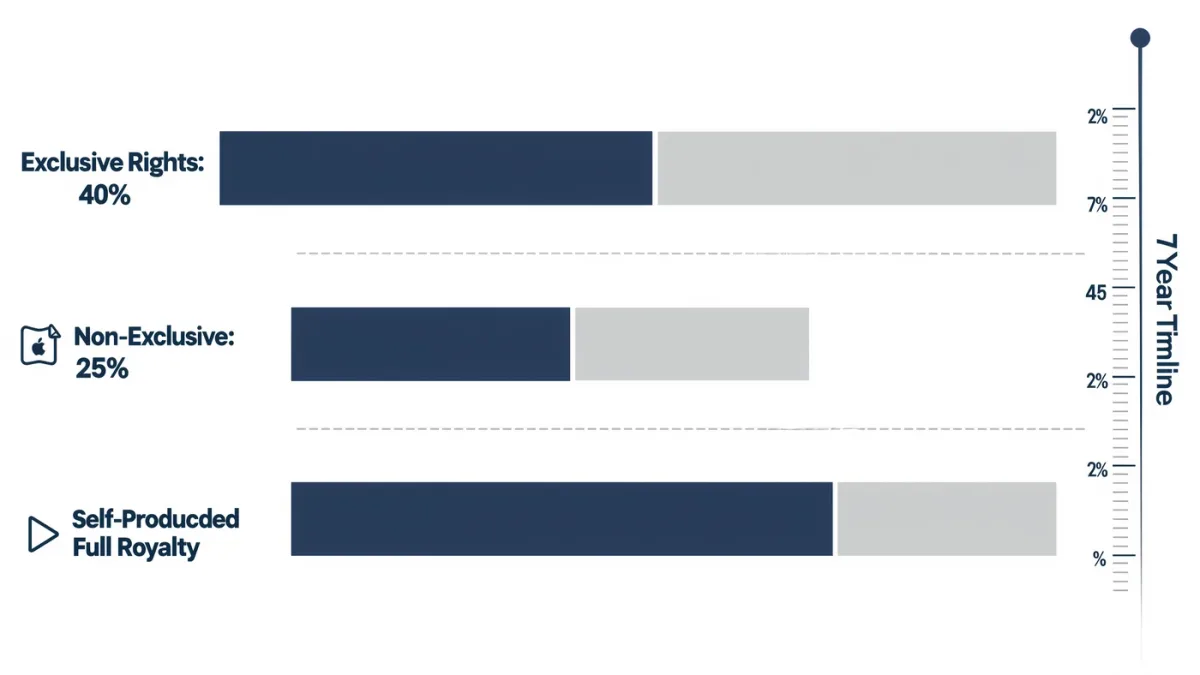
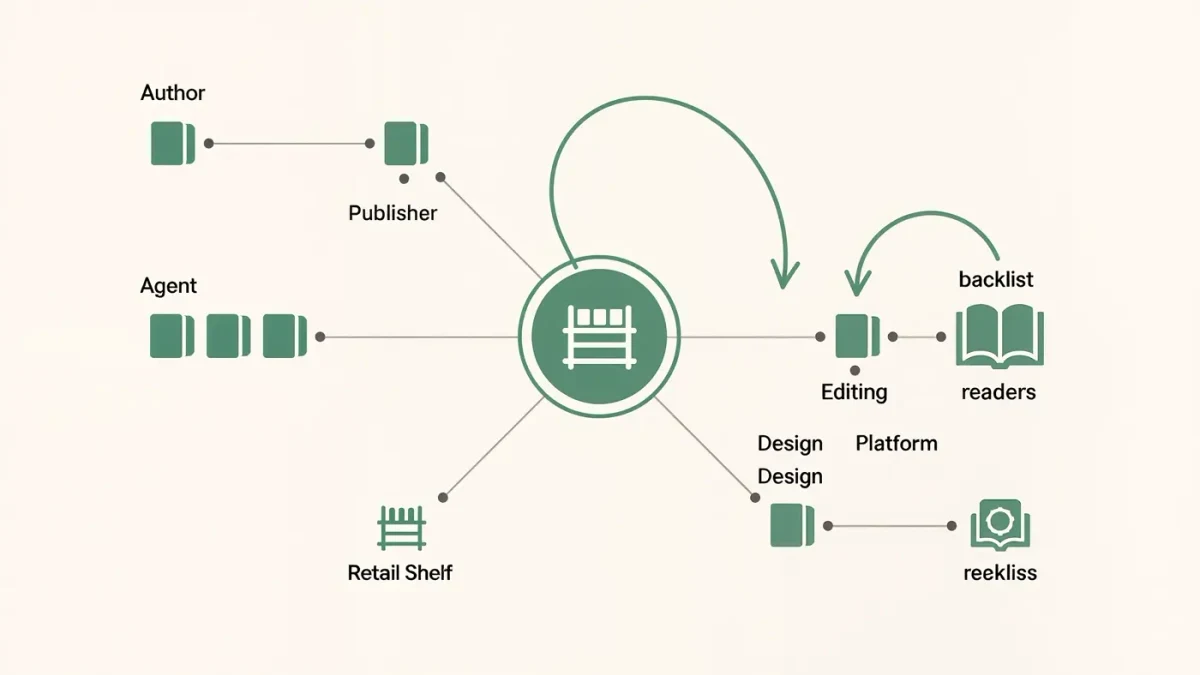
Every use of the book that is not the publisher's core edition: translation, audio, serial excerpts, book club, large print, and film or television options. The contract divides them into publisher-held and author-retained rights, and the split of proceeds differs by right — audio licensed by the publisher commonly returns the author a defined share of receipts, while rights the agent sells directly (often translation and audio, when retained) pay the author the gross minus the agency commission. The strategic fact: retained rights pay more per deal but require an agent or rights manager actively selling them. A first novelist who signed broad grants earns less from a booming format simply because the publisher collects and remits.
What happened with audio?
It became the growth story. AAP StatShot reporting has tracked double-digit annual download-audio revenue growth for over a decade through 2025, and trade coverage shows audio rights bids rising accordingly — both on new deals, where audio is increasingly priced in, and on backlist reversions, where older contracts' cheap audio grants became valuable to publishers. For working writers the practical points are unromantic: audio can be licensed per-title or across a list, self-produced audiobooks exist through narrator-marketplace platforms, and the contractual question — who holds the right, for how long, at what split — decides most of the money.
What about speaking, teaching, and freelancing?
For many mid-career authors these lines outearn the books themselves. Paid appearances — festivals, keynotes, library events, corporate talks — are booked through publishers' lecture agents or independently, with fees that scale with the book's performance rather than its quality. Teaching is the other pillar: MFA programs, workshops, and online courses pay predictably, and the Bureau of Labor Statistics' occupational data for writers and authors — median earnings in the low seventies of thousands of dollars as of its 2024 figures — quietly reflects that most working writers assemble income from several sources rather than one. Freelance journalism and ghostwriting round out the mix; the craft cost of that work is time, and its benefit is that it keeps the byline alive between books.
Which terms decide the money years later?
Four clauses do most of the work: the royalty schedule by format; the subsidiary rights grant (what the publisher controls and for how long); the reversion or out-of-print clause, which determines when unsold rights come home — increasingly triggered by print-on-demand availability thresholds; and the option clause on the next book, which affects negotiating power for everything above. Authors Guild guidance is consistent: the ebook royalty rate and the reversion trigger are the two terms a debut author has the most real leverage over, because the publisher expects to fight over advance size, not boilerplate mechanics. Agents describe spending that leverage as the quiet craft of deal-making.
What should a writer actually do with this?
Read the royalty and rights sections of any offer before celebrating the advance number — the advance is a loan against terms that outlast it. Ask the agent, in writing, which rights the publisher is taking, what the splits are, and what triggers reversion. Keep a rights sheet per title: what was granted, to whom, until when. The authors whose backlists pay decades later are rarely the ones who sold the most books; they are the ones who kept the paperwork.
Frequently asked questions
Do authors get paid when a library buys the book?
The library purchase pays through the normal print royalty — once, at the physical-book rate. Lending itself does not pay the author in the US; some countries operate public-lending-right schemes, and audio and ebook licensing to library platforms pays per the distributor's terms, a growing and disputed line documented in AAP and Authors Guild reporting.
What is an earnout?
The point at which accumulated royalties exceed the advance already paid. Most trade books never earn out — a pattern trade reporting treats as the norm — but earning out matters beyond cash: publishers price the next offer against the earnout math.
Are audiobook narrator costs deducted from the author's share?
For publisher-produced audio, no — production is the publisher's cost against its own share. For author-retained audio deals, production costs typically come out of receipts before the split, which is why royalty-share arrangements with narrators became common in self-produced audio.