Translation income runs through a specific pipe: the author's agency — frequently via specialized foreign-rights co-agents in each territory — licenses the book to a foreign publisher at a fair or through a submission, with advances that trade reporting places anywhere from a few hundred dollars in small-language markets to five figures for hot properties in German or Japanese, and the author's share commonly 75 to 90 percent after commissions under standard arrangements, per Authors Guild guidance on subsidiary rights. None of that pipeline is visible from the writing desk, which is why most authors experience translation as weather: deals arrive or do not, mysteriously. The mechanics are learnable, and they suggest actions.
This is a survey of standard practice, not contract advice for a specific deal.
Who actually sells the book abroad?
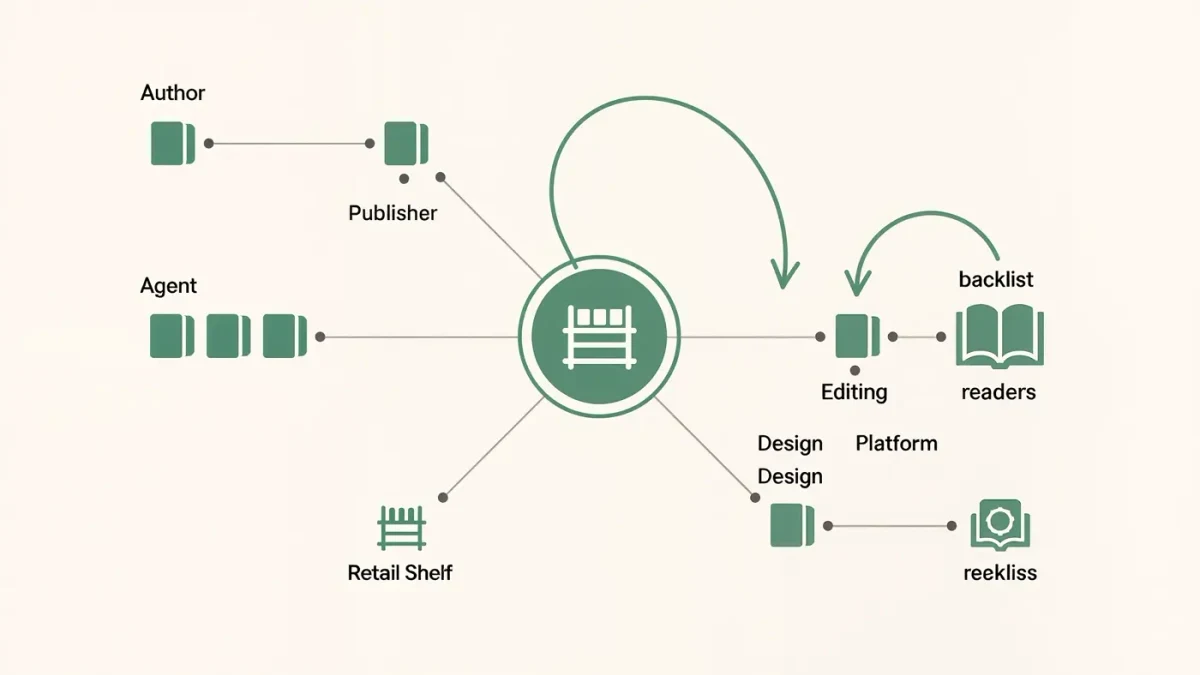
Three layers, usually. The home agency's rights team (or a dedicated foreign-rights agency) owns the catalog and the relationships. Co-agents — one per territory, often based there — translate the pitch, know the local editors, and take a cut for doing so. And scouts, hired by foreign publishers to watch the English-language market, feed recommendations back home. The book travels as a catalog entry and a sample: a synopsis and translated excerpt prepared in advance of the Frankfurt and London fairs, where foreign editors schedule back-to-back meetings the way financers schedule deal days. A novel that reaches a Japanese editor's desk usually did so because someone in this chain pitched it with the right two pages.
Why do some books sell abroad and others never?
Three documented levers. First, rights availability: the author who sold world rights to the home publisher handed the foreign pipeline to that publisher's own rights department — capable, but one catalog among thousands; the author who retained translation rights has an agent actively shopping a cleaner product. Second, translatability: plot-forward prose with clear stakes samples well; voice-driven comedy and deeply local reference sample badly, whatever their merit — a market fact, not a verdict. Third, champions: the documented path of most translated books is a single advocate — a translator who loved it and pitched a publisher, an editor who read it in English at a fair and could not let it go. Translation, trade participants repeat, is a romance business conducted through catalogs.
What is the translator's role in the deal?
Often decisive, and frequently first. Translators pitch books to their own publishers, sometimes with a sample they translated on spec; the profession's working pattern is documented across interviews — a translator reads something in the original, falls for it, and becomes its agent in miniature. Many countries' support programs — government and institute funds that subsidize translation costs or pay for sample translations, run by bodies like the national literature promotion offices in Europe — exist precisely to lower the publisher's risk, and translators know those channels. For the author, the practical consequence: translators are allies worth knowing before any deal exists, and treating them as vendors at the end of the chain misreads how the chain actually builds.
What does a translation deal look like on paper?
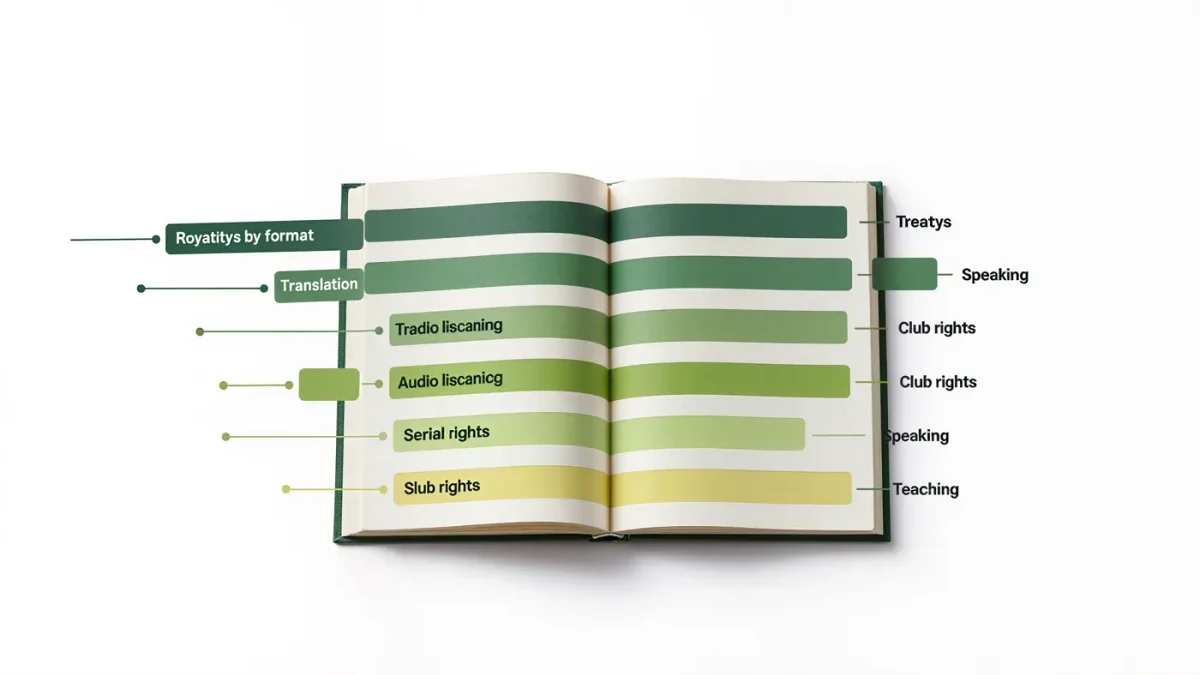
A license for one language and territory, for a set term, with an advance against royalties and — critically — a reversion clause. Foreign advances are frequently modest, and the advance's real function is commitment: a publisher who paid something will print, market briefly, and keep the book alive for the term. The author's split runs through the agency; where the home publisher holds the rights, the contract's subsidiary-rights clause (commonly 75 percent of receipts to the author on publisher-licensed translations) governs. The term matters more than writers expect: foreign licenses that sit unexploited should revert, and agents who audit the catalog every few years recover rights that then sell again — the quiet annuity documented across mid-career authors with patient agencies.
What can an author actually do?
Four moves, all documented. Keep translation rights unencumbered where negotiating power allows, or at least know who holds them. Ask the agency for the foreign plan — which co-agents carry the book, which fairs, what sample exists — and offer to help with a translated excerpt if none does. Cultivate the translator community: blurbs for translation editions, visibility at translation events, the PEN America translation program's public-facing work being the field's gathering place. And be patient in the right direction: backlist translation sales build for a decade after publication, and the authors who collect a dozen modest foreign deals describe the same mechanism — the book kept being pitched, and eventually met its champions.
Frequently asked questions
How much are translation advances?
Commonly modest — from a few hundred dollars in smaller markets to five figures for competitive properties in major ones, per trade reporting — with the advance functioning as commitment rather than income. The annuity is the catalog: rights reverting and reselling over years.
Does the author approve the translator?
Sometimes — approval or consultation clauses on translator selection are negotiable, and agents who care about foreign editions push for them. Where the author has no clause, the foreign publisher chooses, usually accepting translator recommendations that carry the project.
Can I get my book translated myself and sell it?
A pre-translated sample, yes — samples are the pitch currency, and commissioning a strong one is a documented self-start. A full translation made without a publisher is rarely economic: the machine exists to share that cost.